FREE SHIPPING ON ORDERS OVER $60




Top 2% Organic Beans

Ethical & Sustainable

Happiness Guarantee

Subscribe & Save
The Benefits of Organic Coffee
Coffee is one of the world’s most widely enjoyed beverages, supporting millions of consumers and farmers around the globe. To understand why organic coffee matters, it helps to know a bit about how coffee is grown and how farming practices impact both the environment and the quality of your cup.
Environment
Coffee farming was originally developed in Africa as an understory crop — meaning that it was grown under other larger shade trees. This system naturally supported biodiversity: the shade trees provided habitat for birds, butterflies, insects, and other wildlife. Farmers often grew complementary crops like bananas and nut trees, creating additional food and income. Soil fertility was maintained through composting coffee pulp, rotating crops, and avoiding chemical fertilizers and pesticides.
In the 1970s and 1980s, there was a shift toward “technified agriculture”. Large-scale plantations removed shade trees to grow coffee in full sun, aiming to increase yields. This change resulted in widespread deforestation, monocropping, and heavier use of chemical fertilizers and pesticides — contributing to the loss of over 2.7 million acres of forest.
These practices set off a downward spiral: habitat loss, declines in migratory songbird populations, pesticide contamination, degraded soil, polluted water sources, and health risks to workers exposed to chemicals and contaminated water.
To counter these impacts many environmentally focused organizations have developed standards that promote shade-grown and bird-friendly coffee — coffee cultivated under a canopy of diverse trees that provide vital habitats. Many consumers choose organic coffee to support sustainable farming practices in developing regions.
At Java Planet, we share this commitment and are proud to offer coffee that aligns with these environmentally responsible values.
Health Benefits
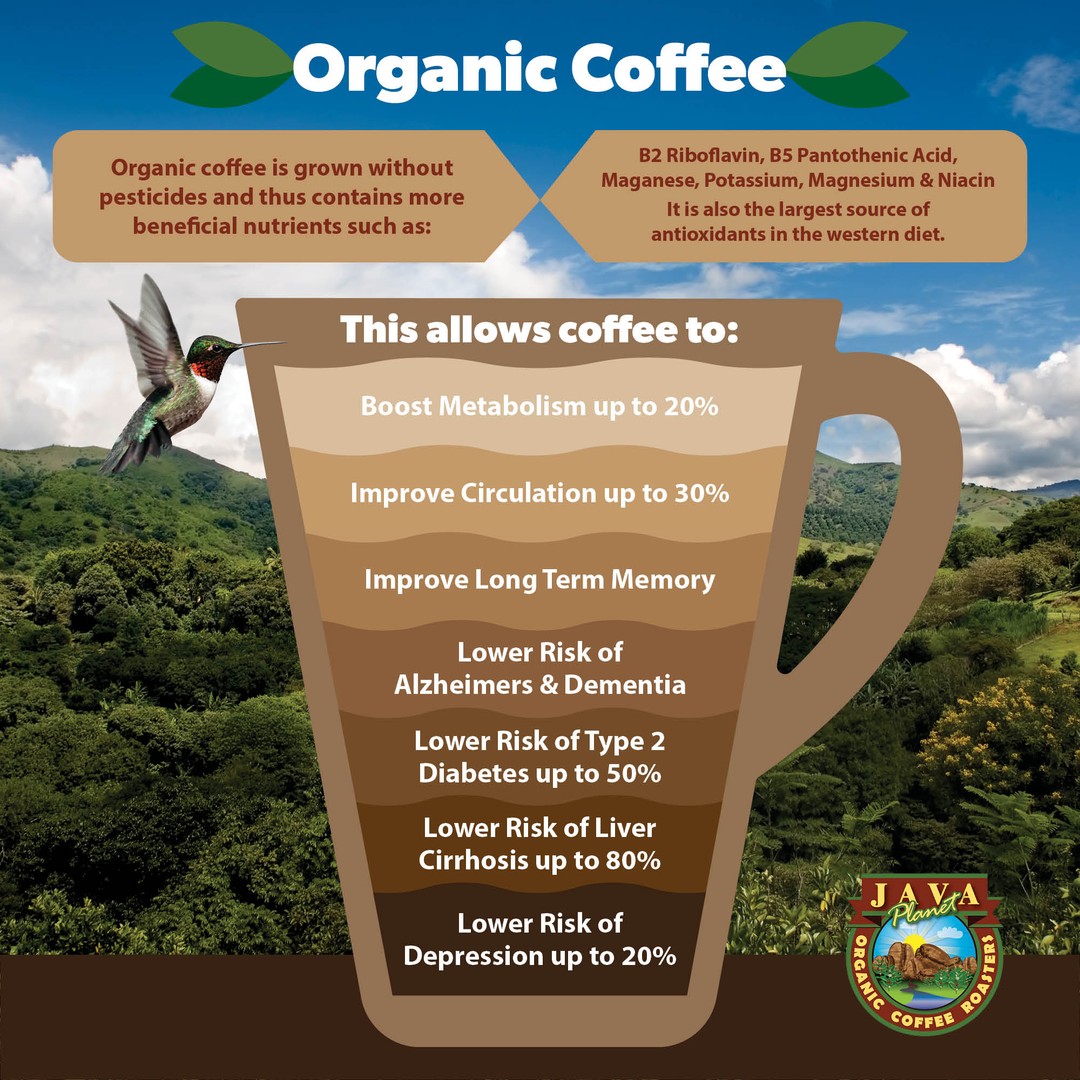
Organic coffee is grown without pesticides or synthetic fertilizers, making it a cleaner, healthier choice for both farmers and consumers. The nutrient-rich soil in which organic coffee is grown naturally enhances the beans’ nutritional value. In addition, coffee itself offers potential health benefits due to its high antioxidant content.
Organic coffee may support a healthy metabolism and provide a natural energy boost. While coffee isn’t a replacement for proper nutrition, it can help curb hunger between meals and keep you from reaching for less healthy snacks.
Organic decaf coffee is processed without chemical solvents like methylene chloride or ethyl acetate (common in conventional decaf). Instead, organic decaf uses natural methods such as the Swiss Water Process, which removes caffeine using only water, time, and temperature.
Lastly, organic coffee simply tastes better! At Java Planet, we believe that coffee grown naturally delivers a cleaner, more flavorful cup. Treat yourself to a bag of our delicious coffee and experience the difference.


© Copyright 2025 Java Planet Organic Coffee Roasters. All rights reserved.