FREE SHIPPING ON ORDERS OVER $60




Top 2% Organic Beans

Ethical & Sustainable

Happiness Guarantee

Subscribe & Save
Why You Should Drink Bird Friendly Coffee
#DRINKBIRDFRIENDLY

You’ve probably heard the term bird-friendly before, but what does it actually mean—and why is it something worth caring about?
In nature, biodiversity is essential. When even one part of an ecosystem is disrupted or removed, it can create a cascade of problems.
A few years ago, we saw this with bees. As bee populations declined, it became clear how much we rely on them—not only for pollinating crops but also for supporting the plants that help produce the oxygen we breathe.
Birds play a similar role. They support healthy ecosystems by helping plants grow, controlling pests, dispersing seeds, and contributing to the overall balance of our environment. It’s difficult to remove any single piece of this system without affecting the entire equation.
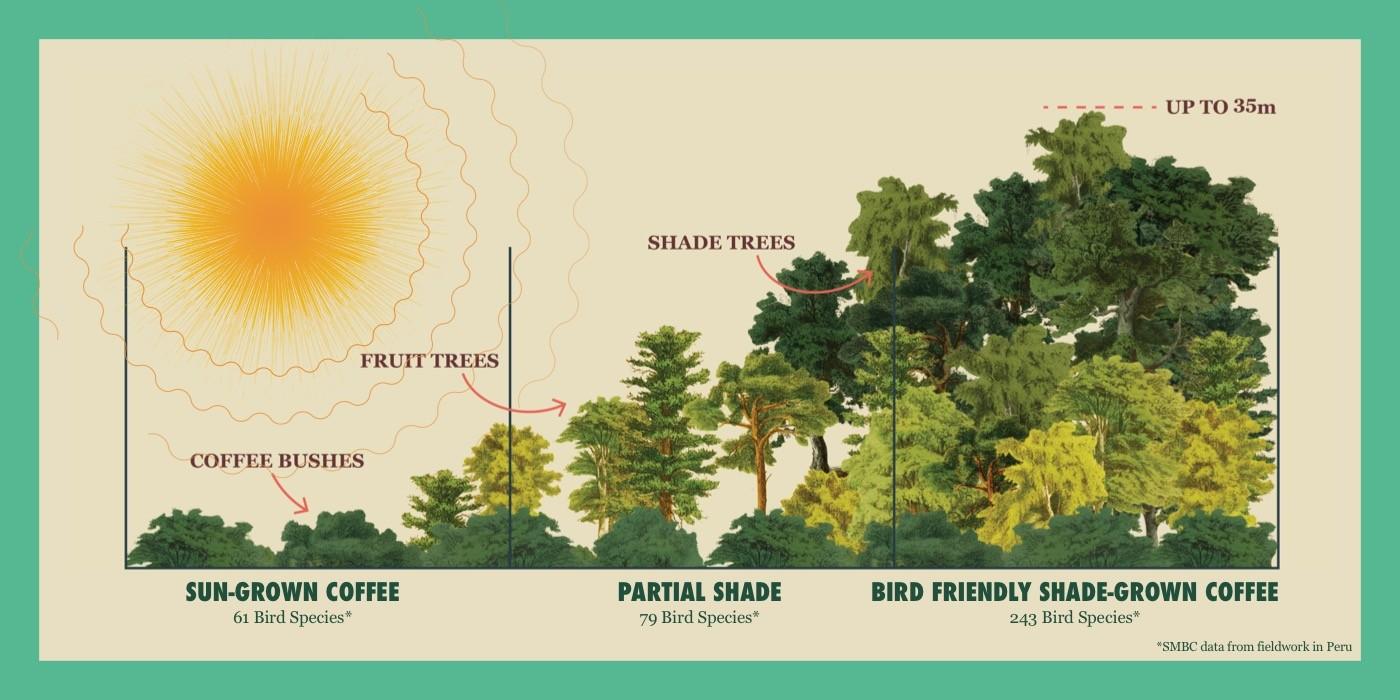
In the 1970’s the practice of “sun-grown” coffee became popular as a way of producing more coffee in less space, with less time and labor.
But this shift came with consequences. Without the natural shade canopy, coffee farms lost the decomposing leaves that once nourished the soil and the birds and wildlife that helped manage pests. As a result, farmers increasingly relied on chemical fertilizers and pesticides—eventually making coffee one of the most heavily sprayed crops in the world.
Because coffee is consumed daily by millions of people, this shift dramatically increased exposure to chemical residues. (It even makes you wonder whether the jitters, headaches, and stomach issues some people experience come from the chemicals rather than the coffee itself.)
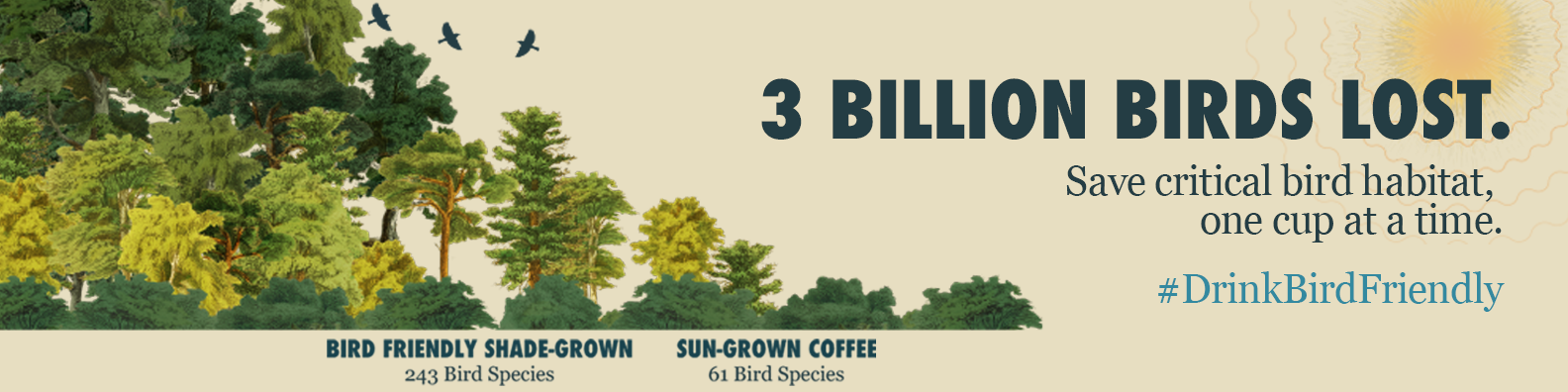
Since 1970 an estimated 3 billion birds have been lost due to this type of deforestation.
Think about the birds you see in your local parks or even in your own backyard. Many of them migrate to Central and South America for the winter. Now imagine flying thousands of miles to your “winter home,” only to find that the habitat you depend on is gone.
The Smithsonian developed a special certification for coffee farms that maintain a required level of foliage cover, tree height, and plant diversity—standards that create high-quality habitats for birds and other wildlife.
This certification goes beyond basic “shade-grown” claims. With standards that cover everything from tree height to insect biodiversity to protect the wildlife that lives where coffee is grown. Bird Friendly® Certified coffees are also certified organic, meaning they are grown without the use of chemical pesticides or fertilizers, which is better for people and for the planet!
Bird Friendly farmers benefit as well. They can sell their coffee at a higher premium, and many earn additional income from the fruit trees that provide shade for their crops.

Every cup of Bird Friendly® coffee purchased rewards these farmers for being good stewards of the environment and encourages them to continue conserving Bird Friendly® habitats.
As a coffee roaster, we support Bird Friendly® farms because we believe this certification is especially important for the long-term health of our planet.
More farms are earning this certification each year and donate a portion of sales through the Smithsonian to help even more farms work toward meeting Bird Friendly® standards.


© Copyright 2025 Java Planet Organic Coffee Roasters. All rights reserved.